

(Image credit: @kaitlyn_mclintock)
When I was 29, I got Botox for the first time and detailed the entire experience for you, dear reader. Well, it was actually Dysport. (Botox and Dysport, as well as Xeomin, Jeuveau, Daxxify, and Letybo, are different brand names of neurotoxin. They all relax muscles and reduce wrinkles yet differ in speed, spread, and typical use areas.) It all started because I couldn’t stop staring at the deep groove that was forming between my brows. I blame it on unintentional RBF and bad eyesight, both of which cause me to squint and/or furrow my brow often. Nonetheless, I took the leap, loved the results, and never looked back.
Since then, I’ve committed to a twice-a-year injection schedule. I’m lucky in that the effects last about six months for me, which is longer than the three- to four-month average. Regardless, Botox, Dysport, or any other neurotoxin is expensive. If I can enhance, maintain, or even extend the results of it, I’m going to.
Enter copper peptides. I’d seen a lot of talk about them online—namely, how they’re the perfect skincare ingredient for people who get neurotoxin injections. I was curious if that was true. I was also wondering how they differ from other peptides. So I did what any good beauty editor would do, and I reached out to the experts. Ahead, learn everything you need to know about copper peptides.
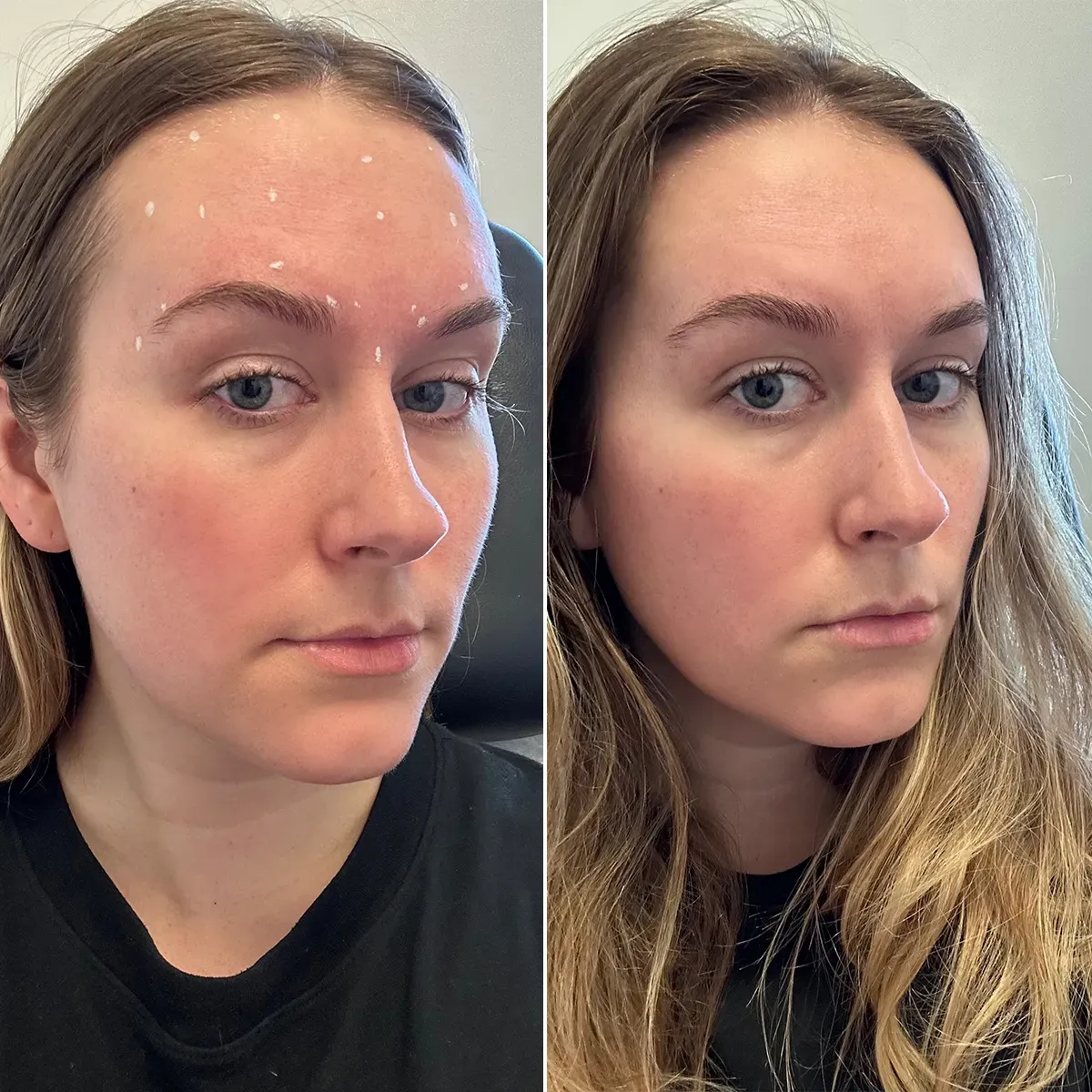
This image shows the exact points where the dermatologist injected Dysport in my forehead. I got 54 units in total to erase my glabella line (the wrinkle between my brows) and give me a subtle brow lift.
(Image credit: @kaitlyn_mclintock)
What Are Copper Peptides?
Brendan Camp, MD, FAAD, is a board-certified dermatologist at MDCS Dermatology. He says copper peptides are tripeptides (a grouping of three amino acids that act as highly effective cell messengers) that are bound with copper (yep, the same stuff you’d find in a penny).
Natia Rufolo, FNP, NP-C, is the founder of Injx by Nat Aesthetics and a board-certified aesthetic injector and PDO thread specialist. She says the fact that these peptides are bound with copper is the key to their efficacy. “The copper component gives them added regenerative and antioxidant benefits, making them especially helpful for healing and improving skin firmness,” she says. “Copper peptides help support collagen and elastin production, promote skin repair, and improve overall skin strength and elasticity.” In other words, they help keep skin looking plump, smooth, and youthful.
What Skin Types Should Use and Avoid Copper Peptides?
The experts say copper peptides are usually well-tolerated by most skin types. “I find they work well for most skin types, but they are especially beneficial for aging, damaged, or compromised skin, as well as those looking to improve firmness and texture without irritation,” Rufolo says.
However, both Camp and Rufolo say you should exercise caution if you have extremely sensitive or reactive skin. (Camp recommends performing a patch test regardless of skin type.) “Copper peptides are generally well tolerated, but I’m cautious using them on very sensitive or reactive skin, especially if there’s an impaired barrier or active inflammation,” Rufolo says. “In those cases, I prefer to introduce them slowly or avoid them altogether until the skin is more stable, since they can sometimes cause irritation when overused or layered with strong actives.”
Can Copper Peptides Really Extend the Results of Botox?
Now for the burning question that’s been on mind for months: Can copper peptides really enhance, maintain, and extend the results of neurotoxins like Botox and Dysport? The experts say yes, but also no. Let them explain. “I wouldn’t say copper peptides truly extend the lifespan of a neurotoxin, as there’s no solid clinical evidence to support that,” Rufolo says. “What they can do is improve overall skin quality—like texture, firmness, and healing—which can complement toxin results and make the skin look smoother and healthier while the neurotoxin is active.”
Camp puts it this way: “Copper peptides are unlikely to augment the effects of neurotoxin injections, but they may complement the impact of in-office cosmetic treatments because they can potentially help address changes related to aging, namely fine lines, wrinkles, and dark spots.”
So in other words, they can enhance and even help maintain the impact of neurotoxins, but they won’t necessarily augment or extend it. For me, that’s more than enough reason to introduce them into my skincare routine. Ahead, see the best copper peptide–spiked skincare products to try.

For reference, this is what my forehead looks like after the Dysport set in. As you can see, I can’t furrow as I used to, my brows are subtly lifted, and my skin is smooth. Success! Now I’ll use copper peptides to complement these results.
(Image credit: @kaitlyn_mclintock)
The Best Copper-Peptide Skincare Products

The Ordinary
Multi-Peptide + Copper Peptides 1%
Both Rufolo and Camp like this budget-friendly serum from The Ordinary (oh, how I love an affordable skincare rec!). “I recommend The Ordinary Multi-Peptide + Copper Peptides 1% Serum because it combines copper peptides with other peptides to support collagen and elastin production, which helps improve skin firmness and overall texture,” Rufolo says. “It’s a great option for patients looking to enhance skin quality without irritation, and I find it to be effective yet affordable for most routines.”
Camp agrees. “This serum incorporates peptides, amino acids, and multiple hyaluronic acids to improve the appearance of fine lines and supports skin elasticity, smoothness, and firmness,” he says.

Biossance
Copper Peptide Rapid Plumping & Hydrating Serum
Camp also recommends this Biossance serum. “Copper peptides are featured alongside squalane, ectoin (an amino acid derivative with emollient and antioxidant properties), and botanicals to lock in long-lasting hydration and visibly plump skin.

Inn Beauty Project
Elastic Skin Firming & Plumping Vegan Growth Factor Serum With Copper Peptides
This vegan serum contains 6% copper peptides to firm, tighten, and improve elasticity, while wild yam, vegan growth factors, and vegan collagen plump and hydrate the skin.

Higher Dose
Glow Serum With Copper Peptides and Vegan Collagen
Higher Dose’s Glow Serum is designed to be used alongside an LED face mask or another, similar device. It’s red-light and heat activated, helping to plump, smooth, and firm the skin with ingredients like copper peptides (duh!) and vegan collagen.

U Beauty
The Smooth Dynamic Wrinkle Defense Serum With Copper Peptides + Retinol
How about an A+ combination of copper peptides and retinol? Yep, U Beauty’s The Smooth Dynamic Wrinkle Defense Serum uses both to visibly improve the appearance of the skin in no time flat.

Allies of Skin
Copper Tripeptide & Ectoin Advanced Repair Serum
I’m a longtime fan of Allies of Skin. I’ve used and love some of its other products, such as the Peptides & Antioxidants Advanced Daily Treatment ($125). This serum is at the top of my to-try list. It contains copper peptides and ectoin to accelerate skin recovery, improve firmness, and smooth lines and wrinkles.
Explore More: